2026-08-14 · 6 min read
Food Diary vs. Calorie Counter: What's the Difference and Which Is for You?
When you decide to take control of your nutrition, you often hear two terms: food diary and calorie counter. They sound similar, and many people use them interchangeably. But is there a difference between a food diary and a calorie counter? Yes, and it's quite significant.
Both are tools for tracking what you eat, but they focus on different aspects of your nutrition. One prioritizes awareness and feelings, while the other values mathematical precision. Let's figure out which approach is right for you and your goals.
The Food Diary: A Focus on Awareness
A classic food diary, or food journal, is a qualitative tool. Its main purpose is not to count every calorie, but to help you understand your eating habits on a deeper level. It's less about numbers and more about context.
In a food diary, you typically record what you ate, but you also add important details. For example, you might note how hungry you were, what emotions you felt, where you were, and who you were with. This helps you see connections you might otherwise miss.
The goal is to identify patterns. Do you snack when you're bored? Do you overeat when you're stressed? A food diary helps you answer the 'why' behind your food choices, which is the first step toward building a healthier relationship with food.
The Calorie Counter: Precision in Numbers
A calorie counter, on the other hand, is a quantitative tool. Its primary function is to track the energy and nutrients you consume. It's all about the data: calories, protein, fats, and carbohydrates.
When you use a calorie counter, you focus on the 'what' and 'how much'. You weigh your portions, scan barcodes, and choose dishes from a database to get an accurate picture of your intake. This mathematical approach is very effective for specific goals.
The main purpose is to manage your energy balance. If you want to lose weight, you need a calorie deficit. If you want to build muscle, you need enough protein and a slight surplus. A counter provides the clear, objective data needed to achieve these goals.
So, What's the Key Difference?
The main difference between a food diary and a calorie counter lies in their focus. A food diary is about the 'why': your feelings, triggers, and habits. A calorie counter is about the 'what': the exact amount of energy and macronutrients you consume.
Think of it this way: a food diary is like a journal for your relationship with food, helping you understand your behavior. A calorie counter is like a budget spreadsheet for your body, helping you manage your energy resources.
Neither approach is inherently better than the other. The best tool depends entirely on your personal goals. If you want to tackle emotional eating, a diary is a great starting point. If you have a clear weight management goal, a counter is more direct and effective.
The Best of Both Worlds: A Hybrid Approach
The good news is that you don't have to choose just one. In fact, combining the awareness of a food diary with the precision of a calorie counter can be incredibly powerful. This way, you get the full picture: the numbers and the story behind them.
You can use an app to track your calories and macros, but also take a moment to reflect on your choices. Why did you choose that snack? Were you truly hungry, or just looking for a distraction? This combination provides data for your body and insights for your mind.
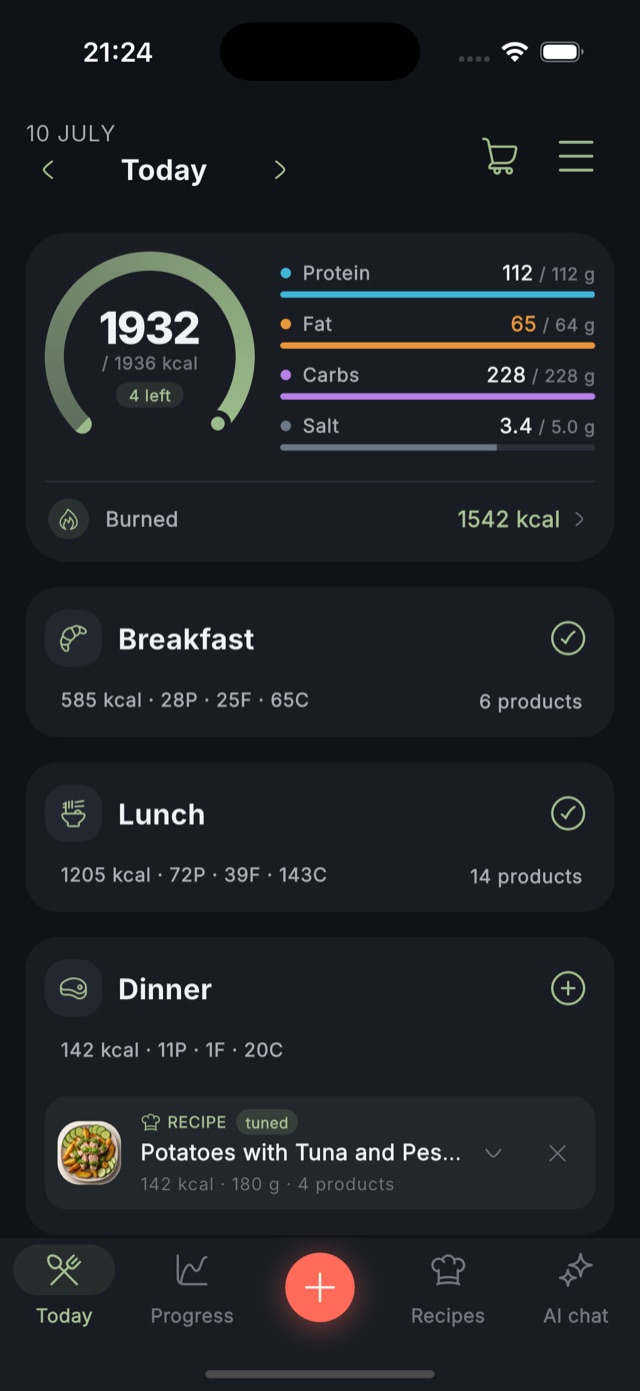
This is the philosophy behind Zru & Hudnu. It functions as an accurate and easy-to-use calorie counter, giving you all the necessary data. At the same time, its calm interface encourages you to simply log your day without judgment, helping you notice your habits in a stress-free way.
By seeing your meals listed clearly, you can reflect on your day's choices. You get the benefit of precise data without the pressure, making it easier to build sustainable, mindful habits.
Which Method Is Right for You?
To decide, think about your primary goal right now.
A **food diary** might be for you if your main goal is to understand your eating triggers, improve your relationship with food, or if you find counting calories stressful and overwhelming.
A **calorie counter** is likely your best choice if you have a specific weight goal (loss, gain, or maintenance), you want to ensure you're meeting specific nutrient targets (like protein), or if you thrive on data and structure.
A **hybrid approach** is perfect if you want both: to achieve a weight goal through precise tracking while also becoming more mindful of the habits that drive your food choices. This balanced method offers the most comprehensive path to long-term success.
Please remember, this information is for educational purposes and is not a substitute for medical advice. If you have health concerns, please consult with a doctor or a registered dietitian.
Try a Balanced Approach
Zru & Hudnu is designed to make food tracking simple and calm. It accurately counts calories and macros but doesn't pressure you to chase perfection. Start understanding your nutrition better, without stress or extremes.