2026-09-15 · 6 min read
Calorie Counting Diet: A Calm Beginner's Guide to Eating Less Without Feeling Deprived
A calorie counting diet sounds technical, maybe even a little cold. You picture spreadsheets, kitchen scales, and a lot of saying no. But in practice, it's one of the most flexible approaches to eating less, because it works with any food, any schedule, and any lifestyle.
This guide is for people who are curious but not sure where to begin. We'll cover what a calorie deficit actually means, how to find your number, and how to make the whole thing feel less like a math exam and more like paying attention to something that was always there.
What Is a Calorie Deficit Diet, Exactly?
Your body burns a certain number of calories every day just to keep you alive and moving. That number is called your TDEE, total daily energy expenditure. When you eat fewer calories than you burn, you're in a calorie deficit, and your body starts using stored energy (mostly fat) to make up the gap.
A calorie deficit diet is simply a way of eating where you consistently stay a little below that number. No specific foods are banned. No meal timing rules. The core idea is that the total amount of energy you eat matters more than which foods you choose.
That doesn't mean food quality is irrelevant. Protein, fiber, and whole foods help you feel full and give your body what it needs. But the calorie deficit is what drives weight loss.
What Is a Healthy Calorie Deficit to Lose Weight?
A common guideline is a deficit of 300 to 500 calories per day. That tends to produce steady, sustainable loss without leaving you exhausted or constantly hungry. A deficit of 500 calories daily adds up to roughly 3,500 calories per week, which is often cited as approximately one pound of fat.
A slight calorie deficit, around 200 to 300 calories, is a gentler option. It's slower, but it's easier to maintain and causes less muscle loss, especially if you're also exercising.
Bigger deficits, say 700 or more calories below your needs, can work short-term but often backfire: energy drops, hunger spikes, and it becomes harder to stick with. The goal is a deficit you can actually live with for weeks, not days.
As a rough orientation: a moderately active adult woman might aim for 1,500 to 1,700 calories per day, and a man for 1,800 to 2,100. But your real number depends on your height, weight, age, and activity level, so use a TDEE calculator to find your personal baseline.
How to Start Counting Calories Without Losing Your Mind
Step one is knowing your target. Find your TDEE online, then subtract 300 to 500 calories. That's your daily calorie goal. Write it down somewhere you'll see it.
Step two is tracking what you actually eat, not what you plan to eat. Most people are surprised by how much they were eating before, not because they were eating badly, but because portions are genuinely hard to estimate without a reference point.
Start with just logging, no changes yet. Spend three to five days recording your meals honestly. This alone shifts your awareness in a way that's hard to describe until you try it.
Then start adjusting. Swap the afternoon biscuits for something with more protein. Eat a slightly smaller portion of pasta and add more salad. Small moves, repeated consistently, are what actually add up.
Why Calorie Counting Isn't About Hunger
The biggest misconception about a calorie deficit diet is that it means being hungry all the time. It doesn't have to. Hunger is mostly driven by volume and protein, not calories. A 400-calorie bowl of lentil soup keeps you full much longer than a 400-calorie bag of crackers.
When you start paying attention to calories, you naturally start noticing which foods give you more for your budget. You're not eating less food, you're eating food that works harder for you.
Some days will be harder than others. Busy days, social meals, travel. That's not failure, that's just life. A slightly higher calorie day doesn't erase your progress. What matters is the average over time.
How an App Makes This Easier (Without Making It Obsessive)
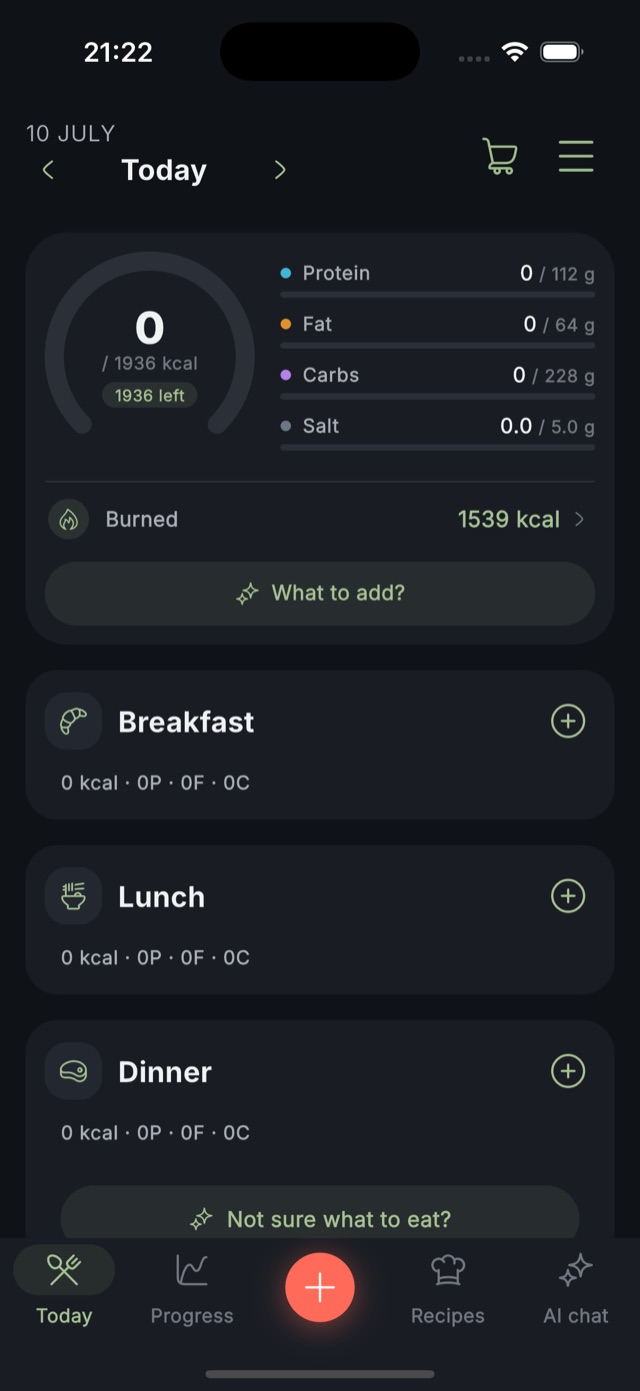
Tracking calories by hand is possible but tedious. An app removes most of the friction. With Zru & Hudnu, you can scan a barcode and get the full nutrition info instantly, or photograph a meal and have it recognized automatically. Both save the mental energy you'd otherwise spend looking things up.
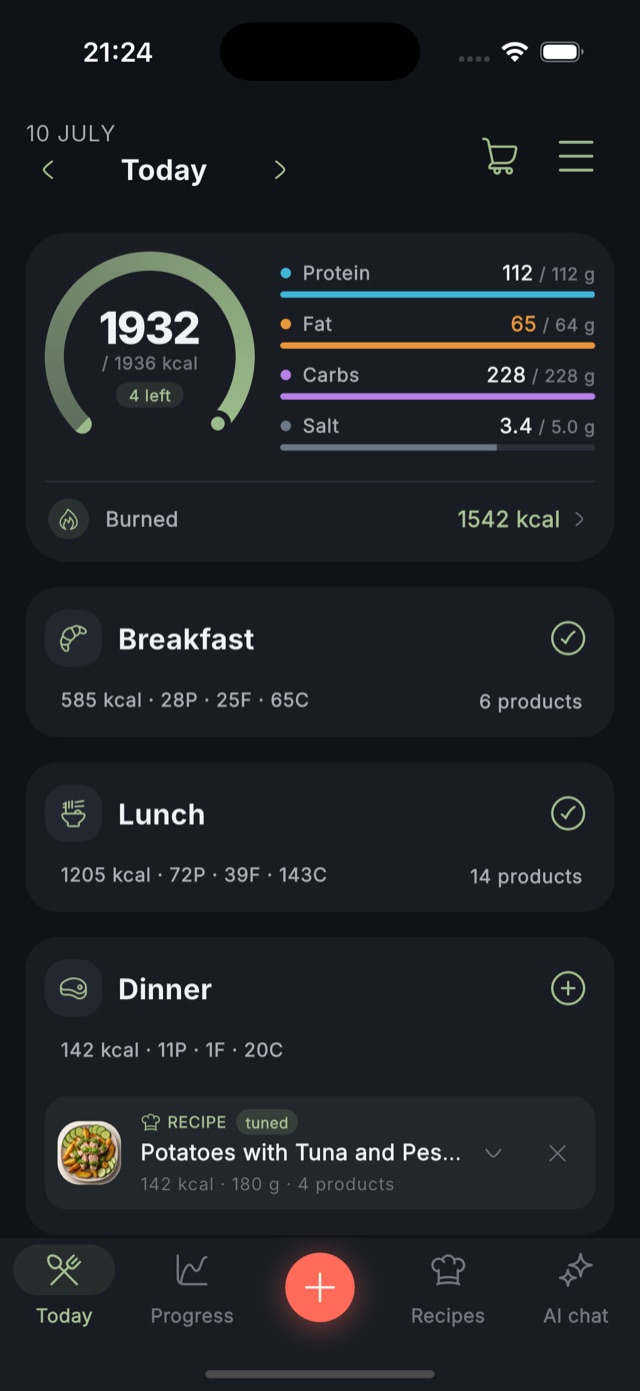
The app also shows you what's left in your day, not just calories but protein, fat, and carbs. If you're short on protein by evening, the "top up" feature suggests specific foods or recipes that fit your remaining budget. It's less about restriction and more about completing the picture.
You don't need to be perfect. Logging 80% of your meals consistently will still give you useful data and real results.
What If You Stop Losing Weight After a Few Weeks?
This is normal and it has a name: a weight loss plateau. As your body gets lighter, it burns fewer calories, so the deficit that worked at the start gradually shrinks. It doesn't mean the method stopped working.
The fix is usually small: recalculate your TDEE at your new weight and adjust your target by 50 to 100 calories. Or add a bit more movement. The plateau is a sign of progress, not a wall.
If you've been in a deficit for a long time and feel consistently drained, it's worth taking a maintenance break for one to two weeks. Eating at your TDEE, not above, lets your body recover without undoing your progress.
Start tracking calmly, no pressure
Zru & Hudnu sets your calorie goal, logs your meals with a scan or a photo, and shows you what to eat next to finish the day well. Free to start.