Intermittent Fasting and Weight Loss: What the Research Actually Says
Does intermittent fasting actually work for weight loss? We break down the latest research calmly: what it does, what it doesn't, and when it helps.
In this article⌄
- What Intermittent Fasting Actually Is (Without the Jargon)
- The Calorie Deficit Connection: Why IF Works When It Works
- What the Latest Research Says About Long-Term Results
- When Intermittent Fasting Genuinely Helps
- Why You Might Not Be Losing Weight Even Without Eating Much
- Should You Eat Your Exercise Calories Back?
Intermittent fasting has been one of the most searched diet topics for years. Some people swear by it, some tried it and felt miserable, and a lot of nutrition influencers treat it like a magic switch. The reality, as usual, is somewhere in the middle.
This article isn't here to sell you on fasting or talk you out of it. It's here to look at what the latest research actually says, where the method genuinely helps, and where it's just a roundabout way of doing something simpler.
In short
- Intermittent fasting works primarily by helping you eat less overall, not through any special metabolic magic.
- For most people, it performs similarly to a straightforward calorie deficit over the long term.
- It can be a genuinely useful tool if skipping breakfast or eating in a window feels natural to you.
- If you're constantly hungry, irritable, or bingeing after your fasting window, it's not the right fit and that's fine.
- The best eating pattern is the one you can sustain without misery.
What Intermittent Fasting Actually Is (Without the Jargon)
Intermittent fasting (IF) is a pattern of eating where you cycle between periods of eating and not eating. The most popular version is 16:8, where you eat within an 8-hour window and fast for 16 hours. Others include 5:2, where you eat normally five days and eat very little on two days, and OMAD, which is one meal a day.
What it isn't is a specific diet. There's no list of foods you must eat or avoid. The whole idea is about when you eat, not what you eat. That distinction matters a lot when we start looking at why it works for some people.

| Method | Eating window | Fasting period |
|---|---|---|
| 16:8 | 8 hours (e.g. noon to 8pm) | 16 hours |
| 5:2 | 5 normal days, 2 restricted | 2 days at ~500 kcal |
| OMAD | One meal per day | ~23 hours |
| 12:12 | 12 hours | 12 hours (includes sleep) |
The Calorie Deficit Connection: Why IF Works When It Works
Here's the honest core of it: intermittent fasting leads to weight loss mainly because it reduces how many calories you eat. By cutting out a meal or shrinking your eating window, most people naturally consume less without counting anything. That's it. That's the mechanism.
Fasting is a calorie deficit in a costume.
Research comparing IF directly to continuous calorie restriction consistently finds similar results when total calories are matched. A large clinical trial published in the New England Journal of Medicine found that time-restricted eating didn't produce significantly better weight loss than a standard calorie-restricted diet over a year. The people who lost more weight were the ones in a bigger deficit, regardless of method.
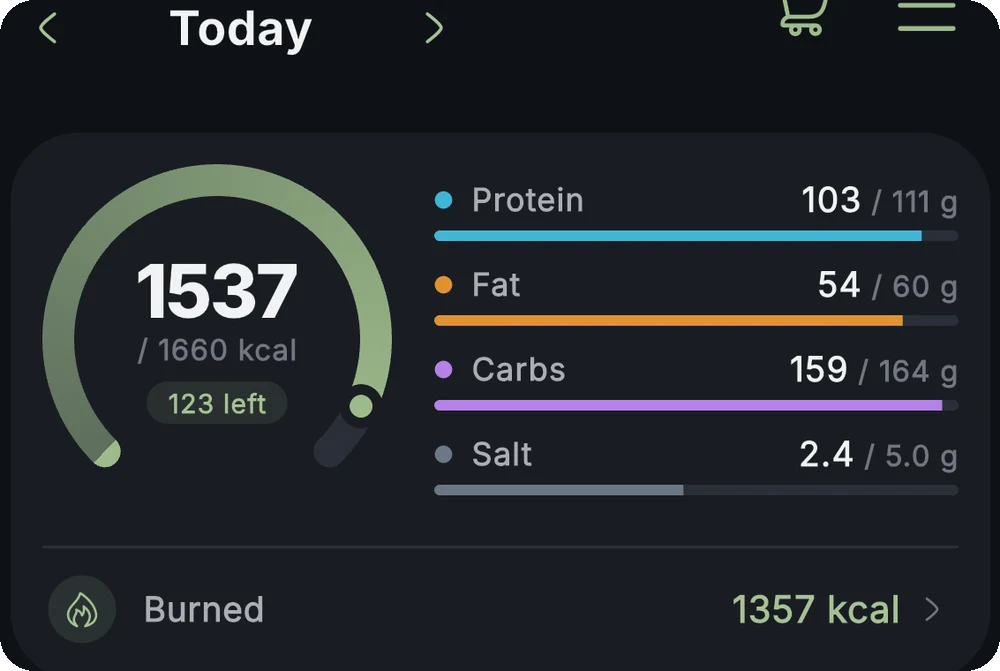
Log a day in Zru & Hudnu and see where your calories really go
Try it freeWhat the Latest Research Says About Long-Term Results
The evidence on intermittent fasting has grown a lot in the last few years, and the picture is nuanced. Short-term studies often show promising results. But when researchers follow people for a year or more, the advantage of IF over a regular calorie deficit tends to shrink or disappear entirely.
One important finding is about adherence. The method that works long-term is almost always the one the person actually sticks to. Some people find a restricted window much easier to follow than tracking every meal. Others find it unbearable. Both responses are completely normal.
16:8
the most studied and most popular IF protocol
~1 year
where most long-term IF trials end, so truly long data is still limited
similar
weight loss outcomes vs. calorie restriction when total intake is matched
There's also some early research suggesting that eating earlier in the day (aligning meals with natural light) may have modest benefits for blood sugar and metabolic markers, independent of weight loss. This is interesting but still preliminary, and it mostly points toward not eating a huge meal right before bed rather than any specific fasting schedule.
When Intermittent Fasting Genuinely Helps
IF is a good fit for you if skipping breakfast feels natural rather than forced. Some people wake up genuinely not hungry and end up eating something just out of habit. Removing that habit and pushing the first meal to noon can cut 300 to 500 calories without any discomfort.
IF probably isn't for you if...
- You wake up hungry and feel foggy without breakfast
- You tend to binge or overeat after restricting
- Your social life or work involves morning meals regularly
- You train hard in the morning and need fuel beforehand
IF might work well if...
- You naturally skip breakfast without thinking about it
- Fewer decisions about food feels freeing, not stressful
- You find counting every meal tedious but can stick to a window
- Your evenings are when you're most likely to overeat
The pattern also helps people who tend to graze all day without realizing how much they've eaten. A defined window creates a natural boundary. It's not magic, it's just structure, and structure helps a lot of people.

Why You Might Not Be Losing Weight Even Without Eating Much
A common frustration: you're fasting, you feel like you're barely eating, but the scale isn't moving. This happens for a few reasons, and none of them mean your metabolism is broken.
- Eating window calories add up. Two large meals can easily match or exceed what you'd eat in three moderate ones. The window doesn't automatically mean fewer calories.
- Liquid calories count. A latte, a juice, or a smoothie during the fasting window can break the deficit without feeling like a meal.
- Stress and sleep affect the scale. Water retention from poor sleep or high cortisol can mask fat loss for days or even weeks.
- The deficit might just be too small. A 100-calorie daily deficit will produce results, but very slowly. It's easy to overestimate how much you're cutting.
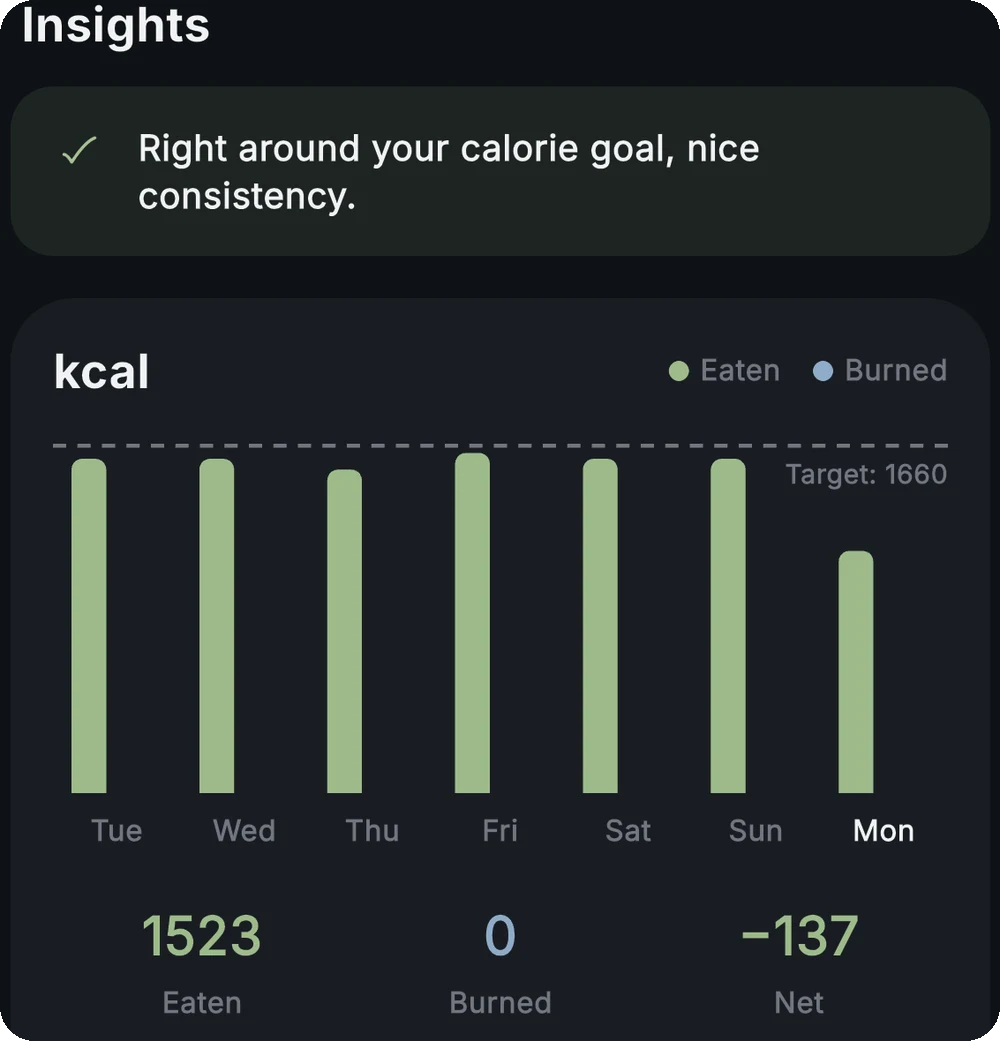
Should You Eat Your Exercise Calories Back?
This question comes up a lot alongside IF. You burned 400 calories on a run. Do you eat them back? The honest answer is: it depends on how your calorie goal was set.
If your daily calorie target already includes an activity level adjustment (which most calculators do), then eating back exercise calories means eating above your intended deficit. If your goal is set as a sedentary baseline and you add exercise on top, eating some of those calories back makes sense, especially if you're doing intense training and feeling depleted.
The practical middle ground: don't stress about eating back every calorie from every workout, but do pay attention to hunger after hard sessions. Chronic undereating while training hard leads to fatigue, muscle loss, and eventually stalling. A slightly smaller deficit on training days is usually better than a huge one.
Questions people ask
Does intermittent fasting work without counting calories?⌄
For some people, yes, because it naturally reduces how much they eat. But if you're eating large meals within your window, you can easily cancel out the deficit without realizing it. A few days of logging helps you understand where you actually stand.
What is a calorie deficit and how does it relate to fasting?⌄
A calorie deficit means eating fewer calories than your body uses in a day. Intermittent fasting is one way to create that deficit by limiting when you eat. But the deficit itself is what drives fat loss, not the fasting schedule.
Can I drink coffee or tea during the fasting window?⌄
Black coffee and plain tea have negligible calories and are generally considered fine during a fast. Adding milk, sugar, or syrups brings in calories and may affect the fast depending on your goals.
Why am I not losing weight even though I'm not eating much?⌄
The most common reasons are eating more than you realize during your window, water retention masking fat loss, or a deficit that's smaller than it feels. Logging for a week usually clarifies the picture.
Is 16:8 fasting better than just eating three meals with a deficit?⌄
Research shows similar results when total calories are matched. The better question is which approach you can maintain without feeling miserable. Both work if the deficit is there.

Author
Tania, nutritionist
Tania is a nutritionist who runs the «Zru & Hudnu» weight-loss marathons and co-created the app. She writes the calm nutrition blog without crash diets.
About the author →
Track what actually matters, at your own pace
Zru & Hudnu logs your meals, shows your daily calorie ring, and adjusts for exercise so you always know where you stand. Free to start, no pressure.
Keep reading