In this article⌄
- What actually makes a food 'ultra-processed'?
- Why ultra-processed foods make calorie balance harder
- Should ultra-processed foods be completely avoided for better health?
- How to log ultra-processed foods accurately (and stop underestimating them)
- Practical swaps that reduce the calorie load without banning anything
- What a realistic week actually looks like
Ultra-processed foods are everywhere, and so is the advice to cut them out entirely. You've probably heard it framed as a simple rule: if it has more than five ingredients or a name you can't pronounce, it doesn't belong in your diet. That sounds clean and decisive, but it doesn't quite match how most people actually eat.
The more useful question isn't whether to eliminate these foods, but why they tend to make calorie balance harder, and what you can do about it without turning every grocery run into an anxiety spiral.
In short
- Ultra-processed foods aren't forbidden, but they're engineered to make you eat past fullness, so awareness matters more than avoidance.
- The main calorie problem is density plus low satiety: a small volume delivers a lot of energy without much protein or fibre to slow you down.
- Logging ultra-processed foods honestly, including the second handful of chips, is more useful than skipping them and feeling guilty.
- Replacing one ultra-processed item per day with a more filling alternative is a realistic, low-drama starting point.
- A flexible approach you can maintain beats a strict ban you abandon after two weeks.
What actually makes a food 'ultra-processed'?
The NOVA classification groups foods by how much industrial processing they go through. Ultra-processed foods (NOVA group 4) are not just cooked or preserved, they're formulated from ingredients you wouldn't find in a home kitchen: emulsifiers, flavour enhancers, modified starches, colour additives. Think packaged snacks, instant noodles, flavoured yogurts, most breakfast cereals, and many ready meals.
The category is broad, which is part of why blanket bans feel impractical. A mass-produced whole-grain loaf and a bag of cheese puffs are both technically ultra-processed, but they behave very differently in your body and in your calorie budget.

Why ultra-processed foods make calorie balance harder
The core issue isn't toxicity or some mysterious harm from additives. It's a combination of high calorie density and low satiety. Ultra-processed foods are typically engineered to hit a bliss point of fat, salt, and sugar that keeps you eating past the moment you'd normally stop.
They also tend to be low in protein and fibre, the two nutrients that do the most work to keep you full. A 150-calorie handful of crackers digests fast and leaves you hungry again in an hour. A 150-calorie portion of cottage cheese with cucumber does not.
The problem isn't that ultra-processed food exists in your diet. It's that it's designed to make you forget you're eating.
There's also the hidden-calorie effect. Sauces, flavoured drinks, and packaged snacks often carry calories that feel invisible because they're eaten quickly, in small pieces, or while doing something else. These are easy to undercount even when you're trying to track.
~500 kcal
extra per day in studies where people ate ultra-processed vs unprocessed diets ad libitum
2-4x
faster eating speed typical with ultra-processed vs whole foods
< 5 g
fibre per day in many ultra-processed-heavy diets vs a recommended 25-30 g
Log a day in Zru & Hudnu and see where your calories really go
Try it freeShould ultra-processed foods be completely avoided for better health?
The short answer is: complete avoidance isn't necessary for most people, and for many it's counterproductive. Strict bans tend to increase preoccupation with forbidden foods and make social eating stressful. That stress has its own cost.
What the evidence points to is a pattern, not a purity test. Diets built mostly around minimally processed foods, with protein, fibre, and volume, tend to make calorie balance easier without requiring willpower at every meal. Ultra-processed foods can exist in that pattern, just not as the foundation of it.
All-or-nothing approach
- Any ultra-processed food is off limits
- One 'slip' feels like failure
- Social meals become stressful
- Often abandoned within weeks
- Creates guilt and obsession
Flexible, awareness-based approach
- Ultra-processed foods fit within a calorie budget
- One indulgent day doesn't derail the week
- Social eating stays enjoyable
- Sustainable over months and years
- Builds real food literacy
How to log ultra-processed foods accurately (and stop underestimating them)
The biggest practical problem with ultra-processed foods isn't eating them, it's logging them honestly. Portion sizes on packaging are often smaller than what people actually eat. A bag of chips listed as 2.5 servings rarely gets eaten in 2.5 sittings.
Scanning barcodes is the fastest fix here. The nutritional data is already on the package, so you're not estimating from memory. The only step that requires attention is entering the actual weight or number of servings you had, not the serving size printed on the label.
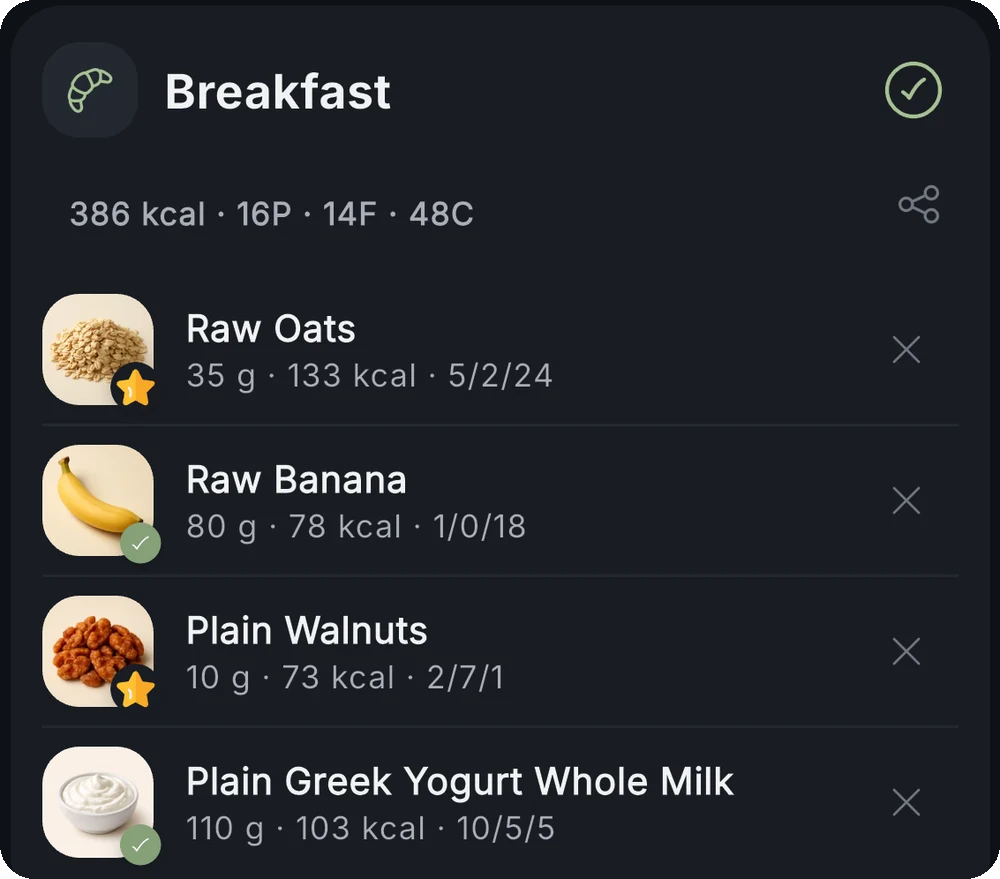
If you ate something at a party or grabbed a snack without checking the label, the photo recognition feature can give you a reasonable starting estimate. It won't be perfect, but a close number is far more useful than leaving the meal unlogged.
Practical swaps that reduce the calorie load without banning anything
The goal isn't to replace every ultra-processed food in your kitchen. It's to find a few high-frequency swaps that reduce calorie density or increase satiety without making your day harder. One or two changes, repeated consistently, add up.
| Instead of | Try | Why it helps |
|---|---|---|
| Flavoured crisps (150 kcal, 1 g protein) | Plain popcorn + parmesan (120 kcal, 4 g protein) | More volume, more protein, slower eating |
| Sweetened breakfast cereal | Oats with fruit and a scoop of protein powder | 3-4x more protein, more fibre, longer fullness |
| Flavoured latte from a chain | Americano or filter coffee with a splash of milk | Saves 150-300 kcal with no change to caffeine |
| Packaged fruit yogurt | Plain Greek yogurt with fresh fruit | Less sugar, double the protein |
| Instant noodles as a full meal | Instant noodles as a base + egg + frozen veg | Same convenience, much better satiety |
Notice that none of these swaps require eliminating the original food forever. They're about adding satiety and reducing invisible calories, not about moral categories of clean and dirty eating.
What a realistic week actually looks like
Most people who track calories and eat well long-term don't eat zero ultra-processed foods. They eat mostly minimally processed food, log what they have, and don't catastrophise when a busier day includes a ready meal or a packet of biscuits.
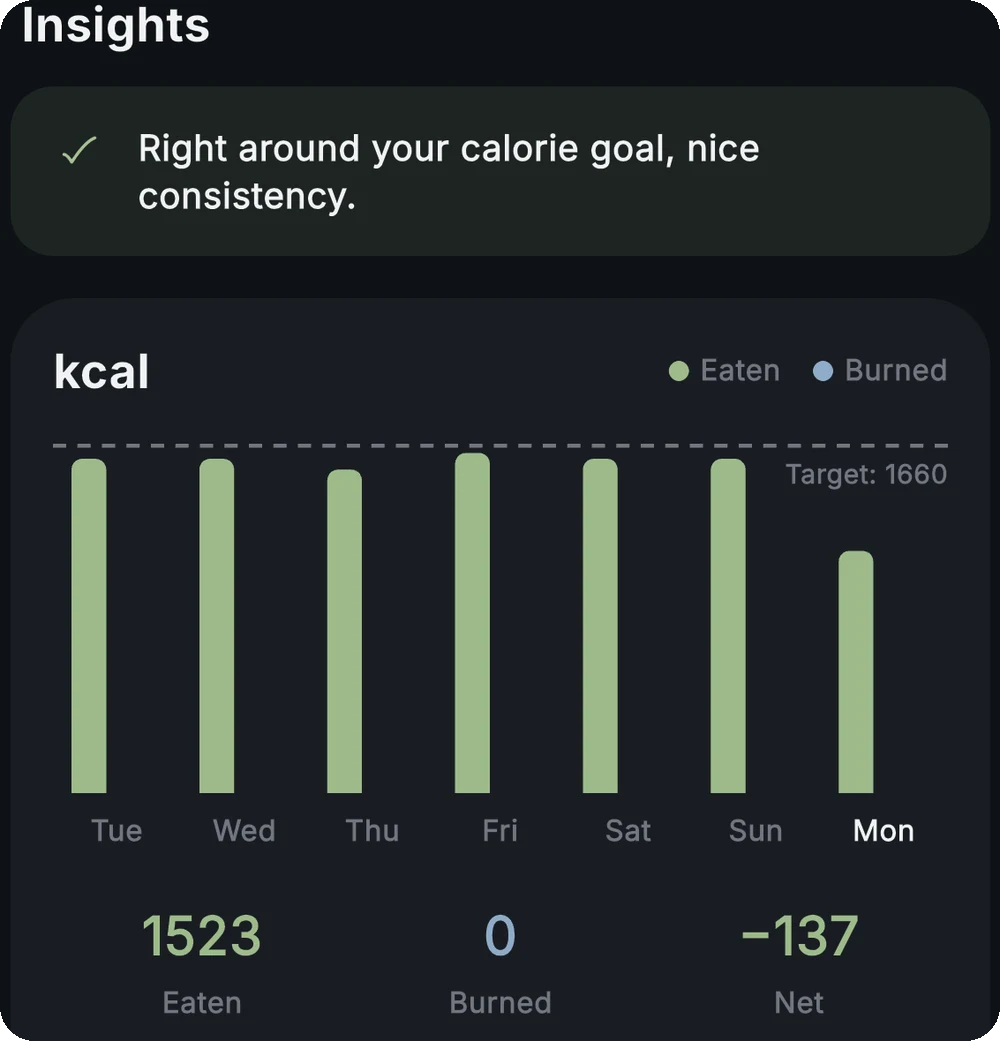
The weekly view matters more than any single day. If five out of seven days are built around protein, vegetables, and whole foods, one or two days with more packaged food won't move the needle much. The pattern is the diet, not the individual meal.
- Log ultra-processed foods with actual grams, not the serving size on the label
- Check protein and fibre for the day, not just calories
- Swap one high-frequency ultra-processed item for a more filling alternative
- Use barcode scanning so the data is accurate without effort
- Look at your weekly pattern, not just today's meals
- Keep the foods you enjoy, adjust the portions and frequency
Questions people ask
Should ultra-processed foods be completely avoided for better health?⌄
Complete avoidance isn't necessary for most people. The research points to patterns, not single foods. A diet built mostly on minimally processed foods can include some ultra-processed items without derailing health or weight goals.
What are hidden calories in ultra-processed foods?⌄
Hidden calories are the ones you don't consciously register: sauces, flavoured drinks, the second serving of a snack you ate while distracted. They're not hidden on the label, just easy to undercount because eating happens fast and mindlessly.
Is it okay to eat chips or cookies while counting calories?⌄
Yes, as long as you log them accurately. The calorie content of packaged snacks is right there on the label. The challenge is logging what you actually ate, not the suggested serving size.
Why do ultra-processed foods make you hungrier?⌄
They're typically low in protein and fibre, the two nutrients that signal fullness most effectively. They also digest quickly, so blood sugar rises and falls fast, bringing hunger back sooner than whole food alternatives.
How do I know if a food is ultra-processed?⌄
Look at the ingredients list. If it contains ingredients you wouldn't use at home, like emulsifiers (e.g. soy lecithin), flavour enhancers, or modified starches, it's likely ultra-processed. A long list isn't always the giveaway, but industrial additives are.

Author
Tania, nutritionist
Tania is a nutritionist who runs the «Zru & Hudnu» weight-loss marathons and co-created the app. She writes the calm nutrition blog without crash diets.
About the author →
Track what you actually eat, without the guilt
Zru & Hudnu logs packaged foods instantly with a barcode scan, shows you protein and fibre alongside calories, and helps you see your weekly pattern without judgment. Free to start.
Keep reading